- 01. Understanding the Swimming Pool Construction Process
- 02. Planning, Design and Site Assessment
- 03. Swimming Pool Installation Steps: From Excavation to Structure
- 04. Plumbing, Electrical Work and Waterproofing
- 05. Pool Finishing and Equipment Installation
- 06. Filling, Testing and Final Handover
- 07. Dubai Municipality Approval and Compliance Considerations
- 08. Factors That Affect Pool Construction Time and Cost
- 09. Common Mistakes to Avoid When Planning a Swimming Pool
- 10. How Aquamate Supports Your Swimming Pool Construction in Dubai
- 11. Conclusion
- 12. Frequently Asked Questions
A private pool is one of the bigger projects a homeowner can take on. It involves digging, structural work, plumbing, electrics, waterproofing and finishing, often with several trades on site.
Knowing what happens at each step helps you ask better questions, plan your budget and spot problems early. This guide walks through the swimming pool construction process from first idea to handover, with notes on approvals and planning for homes in Dubai.
Understanding the Swimming Pool Construction Process
No two pool projects are exactly the same. The order of work depends on the pool type, the site conditions, and the approvals required. A concrete pool is built on site, while prefabricated pools arrive as finished shells or panels and are installed in a different way.
Even so, most projects follow the same broad stages of pool construction: planning and design, excavation and structure, services and waterproofing, finishing and equipment, then filling, testing and handover. Experienced teams such as Aquamate contractors manage each of these stages in order, so your project moves forward without unnecessary delays.
Planning, Design and Site Assessment

Understanding Your Requirements
Start with how you will use the pool. Lap swimming, family play and relaxation each suggest different shapes, depths and sizes. Think about who will use it, especially young children, and what safety measures you want.
Choosing the Location
Consider available space, sun and shade through the day, privacy, distance from the house, and room for equipment and safe walkways around the edge.
Site Assessment
A site survey checks ground conditions, access for machinery, existing underground services and boundaries. These findings can affect the design, construction method and cost.
Design and Circulation Planning
The design sets the dimensions, shape, depth profile and layout. It should also plan the circulation system: how water is drawn out through skimmers or overflow channels and drains, filtered, treated and returned. Getting this right at the design stage matters, because pipework is difficult to change once it is buried.
Swimming Pool Installation Steps: From Excavation to Structure
Excavation and Site Preparation
Once the design and any approvals are in place, the pool outline is marked out and the ground is excavated to the planned shape and depth. Soil removal, access routes and protection for the rest of the garden are planned at this stage.
Building the Pool Structure
What happens next depends on the construction method. For a concrete pool, contractors typically install reinforcement and then form the shell on site. For a prefabricated pool, the shell or panels are set in place on a prepared base. The structural design should come from qualified professionals, because it must suit the site conditions and the pool’s design.
Plumbing, Electrical Work and Waterproofing
Plumbing
Pipework links the skimmers or overflow channels, drains and return inlets to the equipment area. Contractors commonly pressure-test the lines before they are covered, since leaks are far harder to fix later.
Electrical Provisions
Pumps, lighting and other equipment need power. Electrical work around water carries real safety risks, so it must be carried out by qualified electricians in line with applicable regulations.
Waterproofing and Surface Preparation
Where the construction method calls for it, a waterproofing system is applied to the shell before finishing. Materials and methods vary, so ask your contractor what they will use and why.
Pool Finishing and Equipment Installation
Finishes, Tiles and Coping
The interior finish, such as tiles or another surface material, gives the pool its final look and a durable surface. Coping caps the pool edge, and the surrounding deck or paving completes the area. Choose materials suited to wet, barefoot use.
Equipment Installation
The pump, filter, sanitisation system and any optional extras, such as heating, cooling or automation, are installed and connected. Optional features should be decided early, because some need plumbing or electrical provisions built in from the start.
Filling, Testing and Final Handover
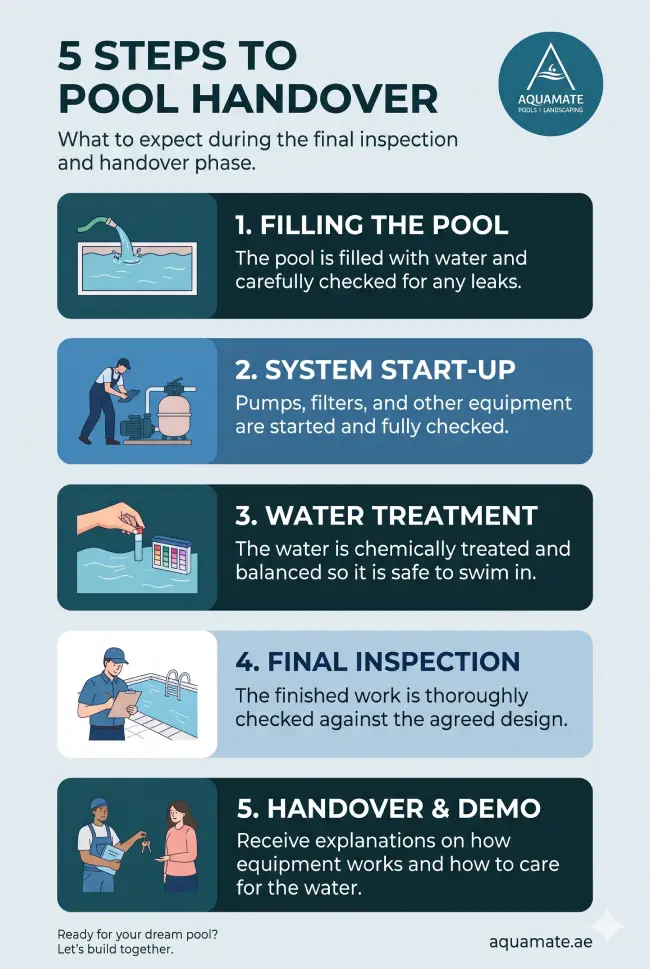
Once construction wraps up, the pool goes through essential final steps. The basin is filled and checked for leaks, followed by testing pumps and filters. Water is chemically treated for safe swimming, and a thorough inspection ensures quality against the design. Finally, a complete handover provides you with operational guidance and manuals. Keep all manuals and warranties safe for future maintenance and repairs.
Dubai Municipality Approval and Compliance Considerations
Approval requirements for a private pool can depend on the property type, its location and the scope of work. Before any digging starts, check what applies to your project through Dubai Municipality swimming pool permit regulations and related official guidance. If you live in a master-planned community, the developer or community management may also have its own rules.
Your contractor may help with paperwork, but responsibility for confirming approvals sits with the property owner, so get clear answers in writing before work begins.
Factors That Affect Pool Construction Time and Cost
| Cost & Time Factor | How It Impacts Your Project |
| Size, depth and shape of the pool | Larger, deeper, or custom-designed pools require more materials, labor, and excavation time. |
| Construction method and materials | Choosing between cast-in-place concrete or prefabricated pools affects structural work timelines. |
| Site conditions and access for machinery | Tight spaces or difficult soil conditions can complicate digging and equipment entry. |
| Interior finishes, coping and surrounding hardscape | High-end tiles, stone pavers, and custom decking add to material costs and finishing duration. |
| Filtration, sanitisation and optional equipment | Advanced pumps, heating/cooling systems, and automated controls increase both setup time and cost. |
| Time needed for approvals | Waiting for permits from local authorities (like Dubai Municipality or developers) impacts the project schedule. |
| Changes made after work has started | Altering designs mid-construction causes delays and extra labor/material expenses. |
Common Mistakes to Avoid When Planning a Swimming Pool
- Choosing a location without considering sun, access or underground services
- Starting work before confirming approvals
- Treating filtration and circulation as an afterthought
- Adding features late, after pipework or electrics are fixed
- Comparing quotes on price alone without checking what each includes
- Forgetting to budget for ongoing maintenance
How Aquamate Supports Your Swimming Pool Construction in Dubai
Planning a pool is easier with an experienced team involved from the start. Aquamate offers swimming pool construction Dubai for villas, residential communities and commercial properties, and handles each stage from the first site assessment to the final handover.
Our team looks at your site conditions, available space and how you plan to use the pool. We then recommend a design, materials and filtration system that suit Dubai’s climate and your budget. Whether you want a compact plunge pool, a family pool or a custom infinity design, we explain your options clearly so you can make confident decisions.
Conclusion
A successful pool starts long before excavation begins. When you understand the swimming pool construction process, you can plan the design, get the required approvals, choose the right professionals and know what to expect at each stage, from the structure and waterproofing through to filling and handover. For expert guidance at every step, Aquamate can help you turn your plans into a well-built pool designed for Dubai’s climate and your lifestyle.
Frequently Asked Questions
1. How long does the swimming pool construction process take?
There is no fixed timeline. Duration depends on pool size, design, construction method, site conditions, approvals and material availability. Ask your contractor for a written schedule that shows each stage and what could cause delays along the way.
2. What are the main stages of pool construction?
Most projects move through planning and design, approvals, excavation, structural work, plumbing and electrical provisions, waterproofing, finishing, equipment installation, filling, water balancing and final handover. The exact order varies with the pool type, design and the site.
3. Do I need approval before starting swimming pool installation steps in Dubai?
Requirements depend on your property, location and project scope. Check with Dubai Municipality and, if you live in a managed community, your developer or community management before any work begins on site. Get confirmation in writing.
4. Can I swim as soon as the pool is filled?
Not straight away. The water needs to be treated and balanced, and the equipment checked, before the pool is ready to use. Your contractor should confirm when it is safe and explain basic water care during handover.
5. What affects the cost of building a pool in Dubai?
Size, depth, shape, construction method, site conditions, finishes, equipment and extra features all play a part. Site access and approval requirements can also matter, so compare detailed, itemised quotes rather than headline prices alone before you sign.